1
/
of
1
Cambridge University Press
Rediscovering Political Friendship: Aristotle's Theory and Modern Identity, Community, and Equality
Rediscovering Political Friendship: Aristotle's Theory and Modern Identity, Community, and Equality
Regular price
$176.42 USD
Regular price
Sale price
$176.42 USD
Shipping calculated at checkout.
Quantity
Couldn't load pickup availability
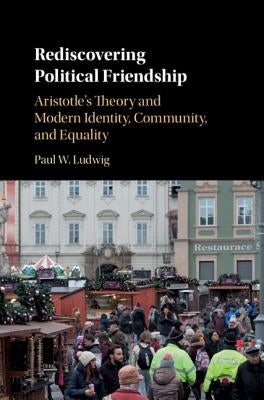
Aristotle argued that citizenship is like friendship, and this book applies his argument to modern society. Modern citizens may lack the concept of civic friendship, but they persist in many practices and passions that were once considered essential to it. Citizens share many similarities with friends: prejudices held in common, favoritism towards each other, and - despite disagreement on specifics - underlying agreement about what is important, such as freedom and equality. Aristotle's theory reminds us that civic friendship is a factual condition of healthy societies, not a pie-in-the-sky ideal. By recognizing when it occurs and understanding it, we can build on it to counteract societal polarization. Civic friendship offers an alternative to populism and nationalism by engaging some of the same passions. In an era increasingly marked by tribalism and identity politics, this timely study will be of interest to a wide range of readers in political science, classics, and philosophy.
Author: Paul W. Ludwig
Publisher: Cambridge University Press
Published: 01/09/2020
Pages: 362
Binding Type: Hardcover
Weight: 1.40lbs
Size: 9.10h x 6.20w x 0.90d
ISBN: 9781107022966
Review Citation(s):
Choice 04/01/2021
Author: Paul W. Ludwig
Publisher: Cambridge University Press
Published: 01/09/2020
Pages: 362
Binding Type: Hardcover
Weight: 1.40lbs
Size: 9.10h x 6.20w x 0.90d
ISBN: 9781107022966
Review Citation(s):
Choice 04/01/2021
About the Author
Ludwig, Paul W.: - Paul W. Ludwig teaches liberal arts at St John's College, Annapolis. He is the author of Eros and Polis: Desire and Community in Greek Political Theory (Cambridge, 2002) and has contributed articles to the American Journal of Philology and the American Political Science Review.
Share