1
/
of
1
Oxford University Press, USA
Religion and Trade: Cross-Cultural Exchanges in World History, 1000-1900
Religion and Trade: Cross-Cultural Exchanges in World History, 1000-1900
Regular price
$33.95 USD
Regular price
Sale price
$33.95 USD
Shipping calculated at checkout.
Quantity
Couldn't load pickup availability
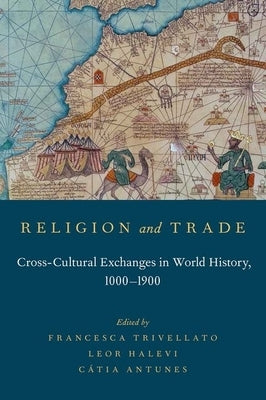
Although trade connects distant people and regions, bringing cultures closer together through the exchange of material goods and ideas, it has not always led to unity and harmony. From the era of the Crusades to the dawn of colonialism, exploitation and violence characterized many trading
ventures, which required vessels and convoys to overcome tremendous technological obstacles and merchants to grapple with strange customs and manners in a foreign environment. Yet despite all odds, experienced traders and licensed brokers, as well as ordinary people, travelers, pilgrims,
missionaries, and interlopers across the globe, concocted ways of bartering, securing credit, and establishing relationships with people who did not speak their language, wore different garb, and worshipped other gods. Religion and Trade: Cross-Cultural Exchanges in World History, 1000-1900 focuses on trade across religious boundaries around the Mediterranean Sea and the Atlantic and Indian Oceans during the second millennium. Written by an international team of scholars, the essays in this volume examine a wide
range of commercial exchanges, from first encounters between strangers from different continents to everyday transactions between merchants who lived in the same city yet belonged to diverse groups. In order to broach the intriguing yet surprisingly neglected subject of how the relationship between
trade and religion developed historically, the authors consider a number of interrelated questions: When and where was religion invoked explicitly as part of commercial policies? How did religious norms affect the everyday conduct of trade? Why did economic imperatives, political goals, and legal
institutions help sustain commercial exchanges across religious barriers in different times and places? When did trade between religious groups give way to more tolerant views of the other and when, by contrast, did it coexist with hostile images of those decried as infidels? Exploring captivating examples from across the world and spanning the course of the second millennium, this groundbreaking volume sheds light on the political, economic, and juridical underpinnings of cross-cultural trade as it emerged or developed at various times and places, and reflects on the
cultural and religious significance of the passage of strange persons and exotic objects across the many frontiers that separated humankind in medieval and early modern times.
Author: Francesca Trivellato
Publisher: Oxford University Press, USA
Published: 09/17/2014
Pages: 296
Binding Type: Paperback
Weight: 0.85lbs
Size: 9.60h x 6.00w x 0.90d
ISBN: 9780199379194
book prizes given by the Medieval Academy of America and the American Academy of Religion. Cátia Antunes is Associate Professor of Early Modern Economic and Social History at Leiden University. She is the author of two monographs on early modern globalization: Globalisation in the Early Modern Period: The Economic Relationship between Amsterdam and Lisbon, 1640-1705 and Lisboa e
Amesterdão: Um caso de globalização na história moderna.
ventures, which required vessels and convoys to overcome tremendous technological obstacles and merchants to grapple with strange customs and manners in a foreign environment. Yet despite all odds, experienced traders and licensed brokers, as well as ordinary people, travelers, pilgrims,
missionaries, and interlopers across the globe, concocted ways of bartering, securing credit, and establishing relationships with people who did not speak their language, wore different garb, and worshipped other gods. Religion and Trade: Cross-Cultural Exchanges in World History, 1000-1900 focuses on trade across religious boundaries around the Mediterranean Sea and the Atlantic and Indian Oceans during the second millennium. Written by an international team of scholars, the essays in this volume examine a wide
range of commercial exchanges, from first encounters between strangers from different continents to everyday transactions between merchants who lived in the same city yet belonged to diverse groups. In order to broach the intriguing yet surprisingly neglected subject of how the relationship between
trade and religion developed historically, the authors consider a number of interrelated questions: When and where was religion invoked explicitly as part of commercial policies? How did religious norms affect the everyday conduct of trade? Why did economic imperatives, political goals, and legal
institutions help sustain commercial exchanges across religious barriers in different times and places? When did trade between religious groups give way to more tolerant views of the other and when, by contrast, did it coexist with hostile images of those decried as infidels? Exploring captivating examples from across the world and spanning the course of the second millennium, this groundbreaking volume sheds light on the political, economic, and juridical underpinnings of cross-cultural trade as it emerged or developed at various times and places, and reflects on the
cultural and religious significance of the passage of strange persons and exotic objects across the many frontiers that separated humankind in medieval and early modern times.
Author: Francesca Trivellato
Publisher: Oxford University Press, USA
Published: 09/17/2014
Pages: 296
Binding Type: Paperback
Weight: 0.85lbs
Size: 9.60h x 6.00w x 0.90d
ISBN: 9780199379194
About the Author
Francesca Trivellato is the Frederick W. Hilles Professor of History at Yale University. She is the author of The Familiarity of Strangers: The Sephardic Diaspora, Livorno, and Cross-Cultural Trade in the Early Modern Period and Fondamenta dei vetrai: Lavoro, tecnologia e mercato a Venezia tra Sei
e Settecento.
book prizes given by the Medieval Academy of America and the American Academy of Religion. Cátia Antunes is Associate Professor of Early Modern Economic and Social History at Leiden University. She is the author of two monographs on early modern globalization: Globalisation in the Early Modern Period: The Economic Relationship between Amsterdam and Lisbon, 1640-1705 and Lisboa e
Amesterdão: Um caso de globalização na história moderna.
This title is not returnable
Share