1
/
of
1
Oxford University Press, USA
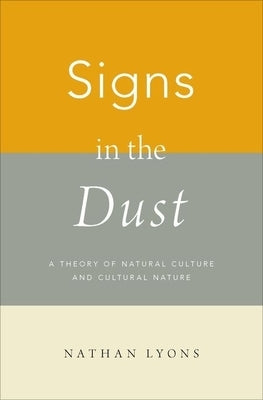
Signs in the Dust: A Theory of Natural Culture and Cultural Nature
Signs in the Dust: A Theory of Natural Culture and Cultural Nature
Regular price
$120.00 USD
Regular price
Sale price
$120.00 USD
Shipping calculated at checkout.
Quantity
Couldn't load pickup availability
Modern thought is characterized by a dichotomy of meaningful culture and unmeaning nature. Signs in the Dust uses medieval semiotics to develop a new theory of nature and culture that resists this familiar picture of things. Through readings of Thomas Aquinas, Nicholas of Cusa, and John
Poinsot (John of St. Thomas), it offers a semiotic analysis of human culture in both its anthropological breadth as an enterprise of creaturely sign-making, and its theological height as a finite participation in the Trinity, which can be understood as an absolute 'cultural nature'. Signs in the
Dust then extends this account of human culture backwards into the natural depth of biological and physical nature. It puts the biosemiotics of its medieval sources, along with Félix Ravaisson's philosophy of habit, into dialogue with the Extended Evolutionary Synthesis that is emerging in
contemporary biology, to show how all living things participate in semiosis, so that that a cultural dimension is present through the whole order of nature and the whole of natural history. It also retrieves Aquinas' doctrine of intentions in the medium to show how signification can be attributed in
a diminished way to even inanimate nature, with the ontological implication that being as such should be reconceived in semiotic terms. The phenomena of human culture are therefore to be understood not as breaks with a meaningless nature, but instead as heightenings and deepenings of natural
movements of meaning that long precede and far exceed us. Against the modern divorce of nature and culture, Signs in the Dust argues that culture is natural and nature is cultural, through and through.
Author: Nathan Lyons
Publisher: Oxford University Press, USA
Published: 04/05/2019
Pages: 272
Binding Type: Hardcover
Weight: 1.05lbs
Size: 9.50h x 6.50w x 1.10d
ISBN: 9780190941260
Poinsot (John of St. Thomas), it offers a semiotic analysis of human culture in both its anthropological breadth as an enterprise of creaturely sign-making, and its theological height as a finite participation in the Trinity, which can be understood as an absolute 'cultural nature'. Signs in the
Dust then extends this account of human culture backwards into the natural depth of biological and physical nature. It puts the biosemiotics of its medieval sources, along with Félix Ravaisson's philosophy of habit, into dialogue with the Extended Evolutionary Synthesis that is emerging in
contemporary biology, to show how all living things participate in semiosis, so that that a cultural dimension is present through the whole order of nature and the whole of natural history. It also retrieves Aquinas' doctrine of intentions in the medium to show how signification can be attributed in
a diminished way to even inanimate nature, with the ontological implication that being as such should be reconceived in semiotic terms. The phenomena of human culture are therefore to be understood not as breaks with a meaningless nature, but instead as heightenings and deepenings of natural
movements of meaning that long precede and far exceed us. Against the modern divorce of nature and culture, Signs in the Dust argues that culture is natural and nature is cultural, through and through.
Author: Nathan Lyons
Publisher: Oxford University Press, USA
Published: 04/05/2019
Pages: 272
Binding Type: Hardcover
Weight: 1.05lbs
Size: 9.50h x 6.50w x 1.10d
ISBN: 9780190941260
About the Author
Nathan Lyons is a lecturer in philosophy at the University of Notre Dame, Australia. He previously held postdoctoral positions at Durham University and the University of Cambridge.
Share