Black Eagle Books
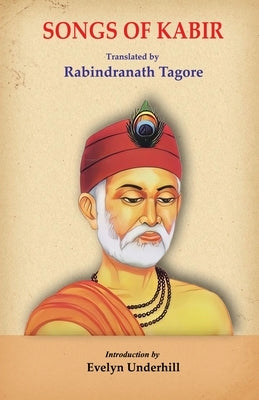
Songs of Kabir
Songs of Kabir
Couldn't load pickup availability
The poet Kabir, a selection from whose songs is here for the first time offered to English readers, is one of the most interesting personalities in the history of Indian mysticism. Born in or near Benares, of Mohammedan parents, and probably about the year 1440, he became in early life a disciple of the celebrated Hindu ascetic Ramananda. Ramananda had brought to Northern India the religious revival which Ramanuja, the great twelfth-century reformer of Brahmanism, had initiated in the South. This revival was in part a reaction against the increasing formalism of the orthodox cult, in part an assertion of the demands of the heart as against the intense intellectualism of the Vedanta philosophy, the exaggerated monism which that philosophy proclaimed. It took in Ramanuja's preaching the form of an ardent personal devotion to the God Vishnu, as representing the personal aspect of the Divine Nature: that mystical "religion of love" which everywhere makes its appearance at a certain level of spiritual culture, and which creeds and philosophies are powerless to kill.
Author: Saint Kabir
Publisher: Black Eagle Books
Published: 09/16/2023
Pages: 90
Binding Type: Paperback
Weight: 0.27lbs
Size: 8.50h x 5.50w x 0.22d
ISBN: 9781645604518
About the Author
Kabir, Saint: - Kabir (1398-1518) was a well-known Indian mystic poet and saint. His writings influenced Hinduism's Bhakti movement, and his verses are found in Sikhism's scripture Guru Granth Sahib, the Satguru Granth Sahib of Saint Garib Das. Kabir's poetic personality has been variously defined by the religious traditions that revere him, and the same can be said for his hagiography. For Sikhs he is a precursor and interlocutor of Nanak, the founding Sikh Guru (spiritual guide). Muslims place him in Sufi (mystical) lineages, and for Hindus he becomes a Vaishnavite (devotee of the god Vishnu) with universalist leanings. But when one goes back to the poetry that can most reliably be attributed to Kabir, only two aspects of his life emerge as truly certain: he lived most of his life in Banaras (now Varanasi), and he was a weaver, one of a low-ranked caste. His humble social station and his own combative reaction to any who would regard it as such have contributed to his celebrity among various other religious movements and helped shape the Kabir Panth, a sect found across northern and central India that draws its members especially, but not exclusively, from the Dalits. The Kabir Panth regards Kabir as its principal guru or even as a divinity-truth incarnate. The broad range of traditions on which Kabir has had an impact is testimony to his massive authority, even for those whose beliefs and practices he criticized so unsparingly. From early on, his presence in anthologies of North Indian bhakti (devotional) poetry is remarkable.Tagore, Rabindranath: - "Rabindranath Tagore (7th May 1861 - 7th August 1941) was an iconic figure in the Indian cultural renaissance. He was a polymath poet, philosopher, musician, writer, and educationist. Rabindranath Tagore became the first Asian to win the Nobel Prize in 1913 for his collection of poems, Gitanjali."Underhill, Evelyn: - "Evelyn Underhill (6 December 1875 - 15 June 1941) was an English Anglo-Catholic writer and pacifist known for her numerous works on religion and spiritual practice, in particular Christian mysticism. Her best-known is Mysticism, published in 1911."
This title is not returnable
Share