1
/
of
1
Oxford University Press
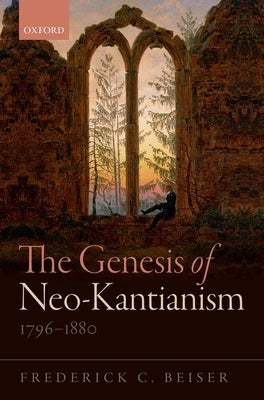
The Genesis of Neo-Kantianism, 1796-1880
The Genesis of Neo-Kantianism, 1796-1880
Regular price
$367.45 USD
Regular price
Sale price
$367.45 USD
Shipping calculated at checkout.
Quantity
Couldn't load pickup availability
Frederick C. Beiser tells the story of the emergence of neo-Kantianism from the late 1790s until the 1880s. He focuses on neo-Kantianism before official or familiar neo-Kantianism, i.e., before the formation of the various schools of neo-Kantianism in the 1880s and 1890s (which included the
Marburg school, the Southwestern school, and the Gottingen school). Beiser argues that the source of neo-Kantianism lies in three crucial but neglected figures: Jakob Friedrich Fries, Johann Friedrich Herbart, and Friedrich Beneke, who together form what he calls 'the lost tradition'. They are the
first neo-Kantians because they defended Kant's limits on knowledge against the excesses of speculative idealism, because they upheld Kant's dualisms against their many critics, and because they adhered to Kant's transcendental idealism. Much of The Genesis of Neo-Kantianism, 1796-1880 is devoted
to an explanation for the rise of neo-Kantianism. Beiser contends that it became a greater force in the decades from 1840 to 1860 in response to three major developments in German culture: the collapse of speculative idealism; the materialism controversy; and the identity crisis of philosophy. As he
goes on to argue, after the 1860s neo-Kantianism became a major philosophical force because of its response to two later cultural developments: the rise of pessimism and Darwinism.
Author: Frederick C. Beiser
Publisher: Oxford University Press
Published: 01/27/2015
Pages: 626
Binding Type: Hardcover
Weight: 2.38lbs
Size: 9.30h x 6.10w x 1.70d
ISBN: 9780198722205
Review Citation(s):
Choice 09/01/2015
Marburg school, the Southwestern school, and the Gottingen school). Beiser argues that the source of neo-Kantianism lies in three crucial but neglected figures: Jakob Friedrich Fries, Johann Friedrich Herbart, and Friedrich Beneke, who together form what he calls 'the lost tradition'. They are the
first neo-Kantians because they defended Kant's limits on knowledge against the excesses of speculative idealism, because they upheld Kant's dualisms against their many critics, and because they adhered to Kant's transcendental idealism. Much of The Genesis of Neo-Kantianism, 1796-1880 is devoted
to an explanation for the rise of neo-Kantianism. Beiser contends that it became a greater force in the decades from 1840 to 1860 in response to three major developments in German culture: the collapse of speculative idealism; the materialism controversy; and the identity crisis of philosophy. As he
goes on to argue, after the 1860s neo-Kantianism became a major philosophical force because of its response to two later cultural developments: the rise of pessimism and Darwinism.
Author: Frederick C. Beiser
Publisher: Oxford University Press
Published: 01/27/2015
Pages: 626
Binding Type: Hardcover
Weight: 2.38lbs
Size: 9.30h x 6.10w x 1.70d
ISBN: 9780198722205
Review Citation(s):
Choice 09/01/2015
About the Author
Frederick C. Beiser, Syracuse University, New York
Share