1
/
of
1
Cambridge University Press
The Merchants' Capital: New Orleans and the Political Economy of the Nineteenth-Century South
The Merchants' Capital: New Orleans and the Political Economy of the Nineteenth-Century South
Regular price
$37.34 USD
Regular price
Sale price
$37.34 USD
Shipping calculated at checkout.
Quantity
Couldn't load pickup availability
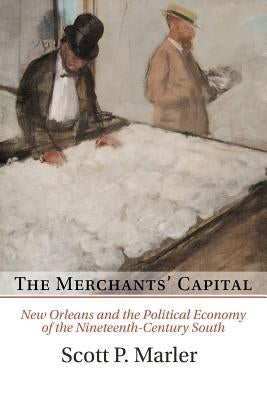
As cotton production shifted toward the southwestern states during the first half of the nineteenth century, New Orleans became increasingly important to the South's plantation economy. Handling the city's wide-ranging commerce was a globally oriented business community that represented a qualitatively unique form of wealth accumulation - merchant capital - that was based on the extraction of profit from exchange processes. However, like the slave-based mode of production with which they were allied, New Orleans merchants faced growing pressures during the antebellum era. Their complacent failure to improve the port's infrastructure or invest in manufacturing left them vulnerable to competition from the fast-developing industrial economy of the North, weaknesses that were fatally exposed during the Civil War and Reconstruction. Changes to regional and national economic structures after the Union victory prevented New Orleans from recovering its commercial dominance, and the former first-rank American city quickly devolved into a notorious site of political corruption and endemic poverty.
Author: Scott P. Marler
Publisher: Cambridge University Press
Published: 10/08/2015
Pages: 334
Binding Type: Paperback
Weight: 1.08lbs
Size: 9.00h x 6.00w x 0.75d
ISBN: 9781107557543
Author: Scott P. Marler
Publisher: Cambridge University Press
Published: 10/08/2015
Pages: 334
Binding Type: Paperback
Weight: 1.08lbs
Size: 9.00h x 6.00w x 0.75d
ISBN: 9781107557543
About the Author
Marler, Scott P.: - Scott P. Marler is an Associate Professor of History at the University of Memphis, where he teaches courses in US, Southern, and Atlantic World history. A former editor at the Journal of Southern History, his work was a finalist for the Allen Nevins Dissertation Prize of the Economic History Association, and he has also won awards from the St George Tucker Society and the Louisiana Historical Association.
Share