1
/
of
1
Oxford University Press, USA
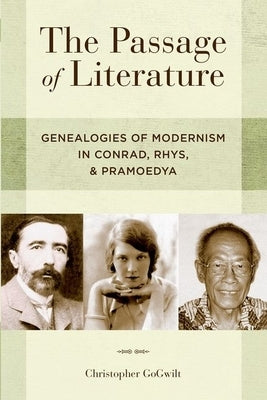
The Passage of Literature: Genealogies of Modernism in Conrad, Rhys, and Pramoedya
The Passage of Literature: Genealogies of Modernism in Conrad, Rhys, and Pramoedya
Regular price
$44.95 USD
Regular price
Sale price
$44.95 USD
Shipping calculated at checkout.
Quantity
Couldn't load pickup availability
Joseph Conrad, Jean Rhys, and Pramoedya Ananta Toer are writers renowned for crafting narratives of great technical skill that resonate with potent truths on the colonial condition. Yet given the generational and geographical boundaries that separated them, they are seldom considered in
conjunction with one another. The Passage of Literature unites the three in a bracing comparative study that breaks away from traditional conceptions of modernism, going beyond temporal periodization and the entrenched Anglo-American framework that undergirds current scholarship. This study nimbly traces a trio of distinct yet interrelated modernist genealogies. English modernism as exemplified by Conrad's Malay trilogy is productively paired with the hallmark work of Indonesian modernism, Pramoedya's Buru quartet. The two novel sequences, penned years apart, narrate
overlapping histories of imperialism in the Dutch East Indies, and both make opera central for understanding the cultural dynamic of colonial power. Creole modernism--defined not only by the linguistic diversity of the Caribbean but also by an alternative vision of literary history--provides a
transnational context for reading Rhys's Good Morning, Midnight and Wide Sargasso Sea, each novel mapped in relation to the colonial English and postcolonial Indonesian coordinates of Conrad's The Shadow-Line and Pramoedya's This Earth of Mankind. All three modernisms-English, Creole, and
Indonesian-converge in a discussion of the Indonesian figure of the nyai, a concubine or house servant, who represents the traumatic core of transnational modernism. Throughout the study, Pramoedya's extraordinary effort to reconstruct the lost record of Indonesia's emergence as a nation provides a
model for reading each fragmentary passage of literature as part of an ongoing process of decolonizing tradition. Drawing on translated and un-translated works of fiction and nonfiction, GoGwilt effectively reexamines the roots of Anglophone modernist studies, thereby laying out the imperatives of a new postcolonial philology even as he resituates European modernism within the literary, linguistic, and
historical context of decolonization.
Author: Christopher Gogwilt
Publisher: Oxford University Press, USA
Published: 09/01/2013
Pages: 352
Binding Type: Paperback
Weight: 1.19lbs
Size: 9.21h x 6.14w x 0.79d
ISBN: 9780199330133
conjunction with one another. The Passage of Literature unites the three in a bracing comparative study that breaks away from traditional conceptions of modernism, going beyond temporal periodization and the entrenched Anglo-American framework that undergirds current scholarship. This study nimbly traces a trio of distinct yet interrelated modernist genealogies. English modernism as exemplified by Conrad's Malay trilogy is productively paired with the hallmark work of Indonesian modernism, Pramoedya's Buru quartet. The two novel sequences, penned years apart, narrate
overlapping histories of imperialism in the Dutch East Indies, and both make opera central for understanding the cultural dynamic of colonial power. Creole modernism--defined not only by the linguistic diversity of the Caribbean but also by an alternative vision of literary history--provides a
transnational context for reading Rhys's Good Morning, Midnight and Wide Sargasso Sea, each novel mapped in relation to the colonial English and postcolonial Indonesian coordinates of Conrad's The Shadow-Line and Pramoedya's This Earth of Mankind. All three modernisms-English, Creole, and
Indonesian-converge in a discussion of the Indonesian figure of the nyai, a concubine or house servant, who represents the traumatic core of transnational modernism. Throughout the study, Pramoedya's extraordinary effort to reconstruct the lost record of Indonesia's emergence as a nation provides a
model for reading each fragmentary passage of literature as part of an ongoing process of decolonizing tradition. Drawing on translated and un-translated works of fiction and nonfiction, GoGwilt effectively reexamines the roots of Anglophone modernist studies, thereby laying out the imperatives of a new postcolonial philology even as he resituates European modernism within the literary, linguistic, and
historical context of decolonization.
Author: Christopher Gogwilt
Publisher: Oxford University Press, USA
Published: 09/01/2013
Pages: 352
Binding Type: Paperback
Weight: 1.19lbs
Size: 9.21h x 6.14w x 0.79d
ISBN: 9780199330133
About the Author
Christopher GoGwilt is Professor of English and Comparative Literature at Fordham University. He is the author of The Invention of the West: Joseph Conrad and the Double-Mapping of Europe and Empire and The Fiction of Geopolitics: Afterimages of Culture from Wilkie Collins to Alfred Hitchcock.
This title is not returnable
Share