1
/
of
1
University of Pittsburgh Press
The Progressive Architecture of Frederick G. Scheibler, Jr
The Progressive Architecture of Frederick G. Scheibler, Jr
Regular price
$44.15 USD
Regular price
Sale price
$44.15 USD
Shipping calculated at checkout.
Quantity
Couldn't load pickup availability
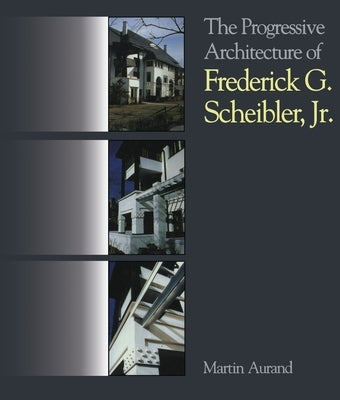
Frederick G. Scheibler, Jr. (1872-1958) was the rare turn-of-the-century American architect who looked to progressive movements such as Art Nouveau and Arts and Crafts for inspiration, rather than conventional styles. His fresh house designs and plans for apartment buildings and multifamily "group cottages" feature dramatic massing, rich detailing, and a wide variety of materials. Scheibler envisioned each building as a work of art, integrating architecture and ornamentation. Prized today, his best works are scattered throughout Pittsburgh's East End and eastern suburbs.
This richly illustrated volume, the first comprehensive study of Scheibler, includes 125 historic and contemporary photographs and drawings, a catalogue raisonné of all of his known projects--including many not recorded in any other published source--a list of books in his library, and a selected bibliography.
Author: Martin Aurand
Publisher: University of Pittsburgh Press
Published: 04/17/2015
Pages: 184
Binding Type: Paperback
Weight: 0.95lbs
Size: 9.90h x 8.40w x 0.60d
ISBN: 9780822963301
This richly illustrated volume, the first comprehensive study of Scheibler, includes 125 historic and contemporary photographs and drawings, a catalogue raisonné of all of his known projects--including many not recorded in any other published source--a list of books in his library, and a selected bibliography.
Author: Martin Aurand
Publisher: University of Pittsburgh Press
Published: 04/17/2015
Pages: 184
Binding Type: Paperback
Weight: 0.95lbs
Size: 9.90h x 8.40w x 0.60d
ISBN: 9780822963301
About the Author
Martin Aurand is architecture librarian at Carnegie Mellon University and archivist of the Carnegie Mellon University Architecture Archives. He is the author of The Spectator and the Topographical City.
Share