1
/
of
1
University of Pittsburgh Press
The Spectator and the Topographical City
The Spectator and the Topographical City
Regular price
$33.96 USD
Regular price
Sale price
$33.96 USD
Shipping calculated at checkout.
Quantity
Couldn't load pickup availability
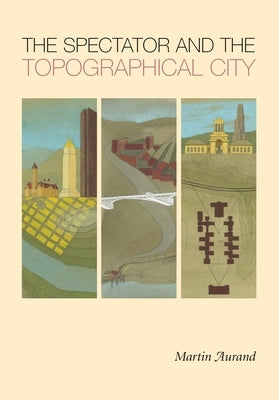
The Spectator and the Topographical City examines Pittsburgh's built environment as it relates to the city's unique topography. Martin Aurand explores the conditions present in the natural landscape that led to the creation of architectural forms; man's response to an unruly terrain of hills, hollows, and rivers. From its origins as a frontier fortification to its heyday of industrial expansion; through eras of City Beautiful planning and urban Renaissance to today's vision of a green sustainable city; Pittsburgh has offered environmental and architectural experiences unlike any other place.
Aurand adopts the viewpoint of the spectator to study three of Pittsburgh's terrestrial rooms: the downtown Golden Triangle; the Turtle Creek Valley with its industrial landscape; and Oakland, the cultural and university district. He examines the development of these areas and their significance to our perceptions of a singular American city, shaped to its topography.
Author: Martin Aurand
Publisher: University of Pittsburgh Press
Published: 01/15/2014
Pages: 248
Binding Type: Paperback
Weight: 1.35lbs
Size: 9.10h x 6.50w x 0.60d
ISBN: 9780822962762
Aurand adopts the viewpoint of the spectator to study three of Pittsburgh's terrestrial rooms: the downtown Golden Triangle; the Turtle Creek Valley with its industrial landscape; and Oakland, the cultural and university district. He examines the development of these areas and their significance to our perceptions of a singular American city, shaped to its topography.
Author: Martin Aurand
Publisher: University of Pittsburgh Press
Published: 01/15/2014
Pages: 248
Binding Type: Paperback
Weight: 1.35lbs
Size: 9.10h x 6.50w x 0.60d
ISBN: 9780822962762
About the Author
Martin Aurand is architecture librarian and archivist at Carnegie Mellon University.
Share