1
/
of
1
Oxford University Press, USA
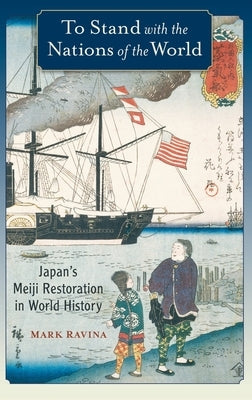
To Stand with the Nations of the World: Japan's Meiji Restoration in World History
To Stand with the Nations of the World: Japan's Meiji Restoration in World History
Regular price
$40.95 USD
Regular price
Sale price
$40.95 USD
Shipping calculated at checkout.
Quantity
Couldn't load pickup availability
The samurai radicals who overthrew the last shogun in 1868 promised to restore ancient and pure Japanese ways. Foreign observers were terrified that Japan would lapse into violent xenophobia. But the new Meiji government took an opposite course. It copied best practices from around the world,
building a powerful and modern Japanese nation with the help of European and American advisors. While revering the Japanese past, the Meiji government boldly embraced the foreign and the new. What explains this paradox? How could Japan's 1868 revolution be both modern and traditional, both
xenophobic and cosmopolitan? To Stand with the Nations of the World explains the paradox of the Restoration through the forces of globalization. The Meiji Restoration was part of the global long nineteenth century during which ambitious nation states like Japan, Britain, Germany, and the United States challenged the world's
great multi-ethnic empires--Ottoman, Qing, Romanov, and Hapsburg. Japan's leaders wanted to celebrate Japanese uniqueness, but they also sought international recognition. Rather than simply mimic world powers like Britain, they sought to make Japan distinctly Japanese in the same way that Britain
was distinctly British. Rather than sing God Save the King, they created a Japanese national anthem with lyrics from ancient poetry, but Western-style music. The Restoration also resonated with Japan's ancient past. In the 600s and 700s, Japan was threatened by the Tang dynasty, a dynasty as
powerful as the Roman empire. In order to resist the Tang, Japanese leaders borrowed Tang methods, building a centralized Japanese state on Tang models, and learning continental science and technology. As in the 1800s, Japan co-opted international norms while insisting on Japanese distinctiveness.
When confronting globalization in 1800s, Japan looked back to that ancient globalization of the 600s and 700s. The ancient past was therefore not remote or distant, but immediate and vital.
Author: Mark Ravina
Publisher: Oxford University Press, USA
Published: 10/13/2017
Pages: 328
Binding Type: Hardcover
Weight: 1.40lbs
Size: 9.30h x 6.10w x 1.10d
ISBN: 9780195327717
Review Citation(s):
Choice 03/01/2018
building a powerful and modern Japanese nation with the help of European and American advisors. While revering the Japanese past, the Meiji government boldly embraced the foreign and the new. What explains this paradox? How could Japan's 1868 revolution be both modern and traditional, both
xenophobic and cosmopolitan? To Stand with the Nations of the World explains the paradox of the Restoration through the forces of globalization. The Meiji Restoration was part of the global long nineteenth century during which ambitious nation states like Japan, Britain, Germany, and the United States challenged the world's
great multi-ethnic empires--Ottoman, Qing, Romanov, and Hapsburg. Japan's leaders wanted to celebrate Japanese uniqueness, but they also sought international recognition. Rather than simply mimic world powers like Britain, they sought to make Japan distinctly Japanese in the same way that Britain
was distinctly British. Rather than sing God Save the King, they created a Japanese national anthem with lyrics from ancient poetry, but Western-style music. The Restoration also resonated with Japan's ancient past. In the 600s and 700s, Japan was threatened by the Tang dynasty, a dynasty as
powerful as the Roman empire. In order to resist the Tang, Japanese leaders borrowed Tang methods, building a centralized Japanese state on Tang models, and learning continental science and technology. As in the 1800s, Japan co-opted international norms while insisting on Japanese distinctiveness.
When confronting globalization in 1800s, Japan looked back to that ancient globalization of the 600s and 700s. The ancient past was therefore not remote or distant, but immediate and vital.
Author: Mark Ravina
Publisher: Oxford University Press, USA
Published: 10/13/2017
Pages: 328
Binding Type: Hardcover
Weight: 1.40lbs
Size: 9.30h x 6.10w x 1.10d
ISBN: 9780195327717
Review Citation(s):
Choice 03/01/2018
About the Author
Mark Ravina is Professor of History at Emory University. He is the author of The Last Samurai and Land and Lordship in Early Modern Japan.
Share