Berkley Books
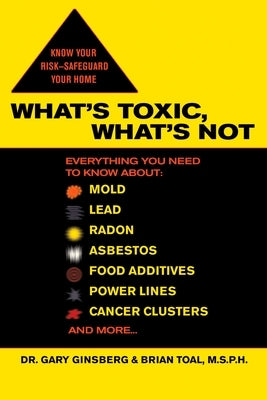
What's Toxic, What's Not: Everything You Need to Know About: Mold, Lead, Radon, Asbestos, Food Additives, Power Lines, Cancer Clusters, and More...
What's Toxic, What's Not: Everything You Need to Know About: Mold, Lead, Radon, Asbestos, Food Additives, Power Lines, Cancer Clusters, and More...
Couldn't load pickup availability
Now, two toxics experts with decades of experience in public health have created a book that separates the risks from the myths of everyday toxins. Comprehensive and easy-to-use, this guide provides scenarios and real-life examples-including important warning signs-that show how to identify problems and what to do about them. With Q&A segments, charts to help assess risk, and a special homebuyer's guide, What's Toxic, What's Not is a book no home should be without.
Author: Gary Ginsberg,Brian Toal
Publisher: Berkley Books
Published: 12/05/2006
Pages: 384
Binding Type: Paperback
Weight: 0.87lbs
Size: 8.96h x 6.08w x 1.03d
ISBN: 9780425211946
Review Citation(s):
Library Journal 12/01/2006 pg. 150
About the Author
Dr. Gary Ginsberg is the senior toxicologist at the Connecticut Department of Public Health, and holds faculty appointments at the medical schools at Yale University and the University of Connecticut. He is a member of a National Academy of Science panel on biomonitoring.
Share